A tangled chain in a velvet box can do more damage than daily wear. Fine jewelry lasts because of its materials and craftsmanship, but longevity also depends on how it is kept between uses. If you are wondering how to store luxury jewelry, the answer is less about display and more about protection, separation, and environment.
Luxury pieces are often worn with ease and then set down too casually - on a marble vanity, beside a sink, inside a travel pouch that becomes permanent storage. That is usually where wear begins. Scratches, loosened clasps, dulled metal, and abraded stones rarely come from one dramatic mistake. More often, they come from repetition.
How to store luxury jewelry without damaging it
The first principle is simple: each piece should have its own space. Diamonds can mark gold. Chains catch on prongs. Earrings rub against polished surfaces and lose their finish over time. A good storage setup prevents contact before it prevents anything else.
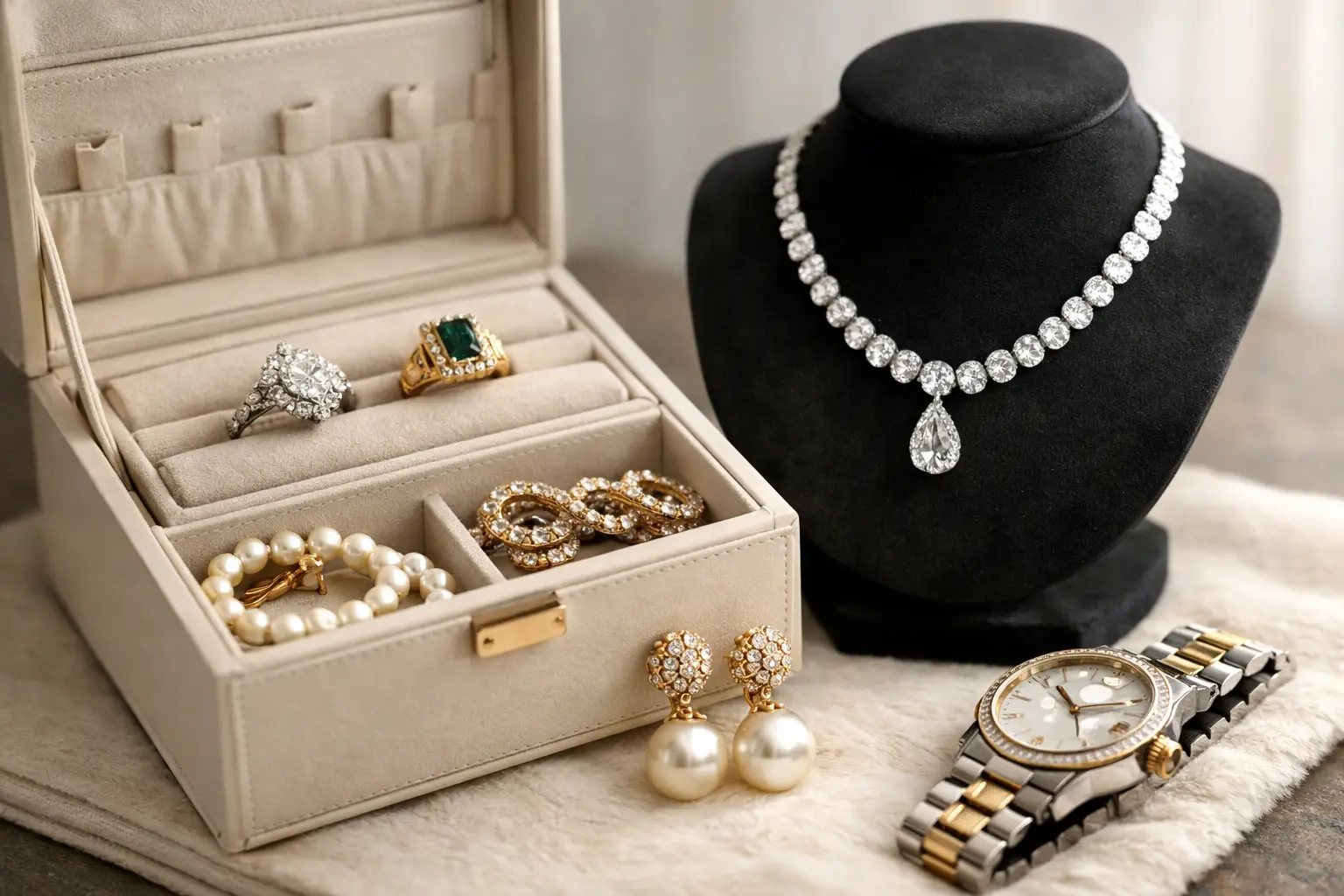
For most collections, the best solution is a structured jewelry box with a soft lining and separate compartments. Suede, microfiber, and quality velvet are all suitable. Hard, unfinished wood interiors and crowded trays are not. If your box is beautiful but poorly divided, it is decorative storage, not protective storage.
Necklaces deserve particular attention. They should be stored flat when possible, or hung individually in a way that prevents tension on the chain. Very delicate chains should not hang for long periods if the clasp or links are especially fine. Weight can distort them over time. If you prefer drawers, lay necklaces straight and give them enough width that they do not overlap.
Rings should be kept in padded slots or individual compartments. This matters even for hard stones. A diamond may resist scratches, but the metal holding it will not. Earrings should be paired and secured before storage. Leaving backs loose in a tray is how sets become incomplete.
The environment matters more than most people think
When people ask how to store luxury jewelry, they often focus on the box and forget the room. Storage conditions affect fine jewelry as much as the organizer itself.
Humidity is the first concern. Bathrooms are convenient, but they are rarely ideal. Heat, steam, and constant moisture can accelerate tarnish on certain metals and wear on delicate finishes. They also affect silk threads, leather cases, and adhesive elements used in some designs. A bedroom drawer or dressing area with a stable, dry climate is usually the better choice.
Direct sunlight is another quiet problem. Prolonged exposure can fade certain gemstones and affect the appearance of treated stones over time. Pearls, opals, and other more sensitive materials are especially vulnerable. Even when damage is not immediate, long-term exposure is unnecessary risk.
Temperature swings are also worth avoiding. Jewelry does best in a consistent environment. Extreme heat, cold, or repeated fluctuations can stress settings, adhesives, and organic materials. This is less dramatic than it sounds, but it reinforces the same point: store fine jewelry where the atmosphere is calm and controlled.
Different materials require different care
Not every luxury piece should be stored the same way. Gold, diamonds, pearls, and gemstone jewelry each respond differently to pressure, moisture, light, and friction.
Gold jewelry benefits from separation and softness. It is durable, but it scratches more easily than many people assume, especially in high-polish finishes. White gold pieces should be stored carefully to preserve their surface appearance between wear and maintenance.
Diamond jewelry should still be stored alone. The stone is hard enough to scratch other pieces and, in close contact, can even mark another diamond. Stud earrings, tennis bracelets, and rings should never be dropped together into one compartment simply because they belong to the same set.
Pearls require more restraint. They are softer, more porous, and more sensitive to both dryness and chemical exposure. Store them in a soft pouch or a lined compartment, never in airtight plastic for long periods. Pearls need a bit of ambient moisture in the air to help preserve their luster. They should also be kept away from rougher jewelry that could mark the nacre.
Opals, emeralds, and some other gemstones also deserve gentler handling. If your collection includes softer or treated stones, a dedicated compartment is the safest approach. Fine jewelry is not one category in practical terms. Its storage should reflect the material.
Travel storage is not long-term storage
A travel case is useful, but it should not become the default home for your collection. Compact rolls and zip cases are designed for short periods of transport, not months of compression.
The risk is not only scratching. Travel storage often keeps pieces folded tightly, stacked closely, or pressed against hardware. Over time, chains kink, settings catch, and metal loses some of its finish. Once you return home, unpack everything and place each item back into proper storage.
If you travel often, choose a case with firm structure, individual fastening points, and a soft interior. Avoid tossing multiple pieces into one pouch, even for a weekend. The shorter the trip, the easier it is to assume it will be fine. That assumption is expensive.
Security should be considered with discretion
Protection is not only about condition. It is also about loss.
For high-value pieces, especially those worn occasionally, a home safe can make sense. The best option depends on the size of your collection and your lifestyle. A safe offers stronger security, but it should still contain soft pouches or lined boxes inside. Jewelry should not sit directly against metal shelves or hard surfaces.
For pieces of significant financial or sentimental value, professional storage or insurance-backed documentation may also be worth considering. This is particularly relevant for heirloom jewelry, rare stones, or gifts intended to hold value over time. Practical luxury includes prudence.
At the same time, not every piece needs to be locked away daily. Your most-worn jewelry should be accessible enough that you store it properly, rather than leaving it on a bedside table because the safer option feels inconvenient. Good storage works because it is used consistently.
Cleaning before storage makes a difference
Jewelry should be put away clean. That does not mean deep-cleaning after every wear, but it does mean removing the obvious residue of the day.
Lotions, sunscreen, perfume, and skin oils build up gradually. On metal, they dull shine. Around stones and clasps, they collect in places that are harder to clean later. A soft, dry cloth is often enough after routine wear. If a piece needs more attention, follow care methods suited to its material before returning it to storage.
This matters particularly for pieces worn daily. A ring that looks pristine can still carry enough residue to affect its brilliance over time. Clean jewelry stores better, and it is also easier to inspect.
Inspect what you store
Storage is the moment to notice what wear usually hides. Before putting a piece away, take a second look at the clasp, prongs, chain links, and earring backs. A loose stone is easier to address before it falls out. A thinning chain is easier to repair before it breaks.
This habit is subtle but valuable. Fine jewelry is meant to endure, but endurance depends on maintenance as much as design. Brands such as Maison Astral build around permanence, yet even well-made jewelry benefits from careful ownership.
A seasonal review is also sensible if your collection includes pieces you wear less often. Open the box. Untangle what needs untangling. Check for tarnish, missing backs, or shifts in setting. Neglect tends to accumulate quietly.
What a refined storage routine actually looks like
In practice, the best routine is simple. Keep jewelry in a dry, stable room. Store each piece separately in a lined compartment or soft pouch. Keep travel cases for travel. Wipe down frequently worn pieces before putting them away. Reserve your safest storage for your most valuable items.
The goal is not ceremony. It is preservation without friction. Luxury is easier to enjoy when care feels natural rather than precious.
A fine piece should look as considered in ten years as it does now. Store it with that horizon in mind.