You can usually tell within seconds when a piece of jewelry was made to impress in a photo rather than live well on the body. The shine is louder than it should be. The finish feels thin. The clasp resists, the stone setting looks slightly unsure, and the whole piece asks for caution before it has earned affection. If you are learning how to spot quality jewelry, that first instinct matters - but it should be backed by a sharper eye.
Fine jewelry is not defined by price alone. A high price can reflect design, rarity, or branding, but quality is more specific. It lives in the metal itself, in the precision of construction, in the balance of the piece when worn, and in whether it remains beautiful after repeated use. The best pieces are not fragile trophies. They are made to become part of a life.
How to spot quality jewelry at a glance
Start with proportion. Well-made jewelry looks resolved. Nothing appears too thin for its purpose, too large for its support, or overly decorative in a way that hides weak construction. A ring band should have enough substance to hold its shape over time. Earrings should feel balanced rather than front-heavy. A chain should drape cleanly without looking brittle.
Then look at the finish. Quality jewelry has a clean surface, but not a harsh one. Polishing should enhance the form, not erase it. Edges should feel intentional. If there is texture, it should be deliberate and even. If there is shine, it should read as depth, not glare.
Symmetry is another quiet marker. On a good piece, matched stones are actually matched. Prongs are consistent. Links align. Closures sit neatly within the design rather than appearing attached as an afterthought. These details are easy to miss when shopping quickly, but they are often what separate lasting jewelry from disposable ornament.
Materials tell the truth
The first question is simple: what is it made of? If a seller is vague, move on. Quality jewelry should state its materials clearly.
Solid gold, vermeil, and plating are not the same
Solid gold offers the strongest long-term value in precious metal jewelry because the material is consistent throughout. It can scratch, as all gold can, but it does not rely on a surface layer for its identity. For pieces you intend to wear often - rings, everyday necklaces, signature earrings - this matters.
Gold vermeil can be a thoughtful middle ground when made properly. It uses sterling silver beneath a thicker layer of gold, which gives more substance than standard plating. Still, it will not behave like solid gold forever. Wear patterns depend on thickness, friction, skin chemistry, and frequency of use.
Basic gold-plated jewelry is more vulnerable. It can look beautiful at first, but the outer layer is thinner and more likely to fade, especially on pieces exposed to lotions, sweat, water, and regular contact. That does not make plated jewelry inherently poor, but it does change what you should expect from it. If permanence matters, material honesty matters just as much.
Sterling silver should feel substantial
Sterling silver remains one of the most appealing fine jewelry materials, especially in clean, sculptural designs. But quality silver jewelry should not feel flimsy. Lightness can be elegant in some earrings or chains, yet a piece that feels too slight may bend, dent, or wear unevenly.
Tarnish alone is not a sign of low quality. Real sterling silver can tarnish over time. What matters more is whether the piece has been well made in the first place - with proper thickness, smooth finishing, and closures that do not weaken after a season.
Hallmarks are useful, but not sufficient
Stamps such as 14K, 18K, 925, or Pt are important signs of declared metal content. They should be crisp and placed discreetly. But a hallmark is only one part of the picture. It does not guarantee design integrity, stone quality, or craftsmanship. Think of it as a starting point, not a final verdict.
Craftsmanship is where quality becomes visible
Material can be excellent and workmanship can still be poor. This is where close inspection matters.
Look closely at stone settings
A secure setting should hold a stone with confidence. Prongs should be even, not misshapen or overly thin. Bezels should sit smoothly around the stone without gaps. If a stone appears tilted, loose, or unevenly framed, the problem is not cosmetic alone - it can affect durability.
Small stones reveal a lot. On lower-quality pieces, pavé or accent stones may look irregular in size, spacing, or height. On a refined piece, those details are calm and consistent. Nothing competes for attention because everything has been resolved.
Clasps and hinges should work quietly
One of the fastest ways to judge quality jewelry is to test the mechanics. A clasp should open and close cleanly, with enough resistance to feel secure but not stiff. Hinged bangles should align exactly when shut. Posts on earrings should sit straight and feel stable.
These components matter because they receive constant stress. Beautiful jewelry that fails at the clasp is not truly well made. In practice, durability is luxury.
Soldering and joins should be discreet
Inspect the points where parts meet. Links, bails, posts, and decorative elements should connect cleanly. Sloppy solder marks, visible glue, rough seams, or awkward transitions are all signs that speed may have taken priority over finish.
In a quality piece, construction is almost invisible. You notice the design first because the workmanship does not interrupt it.
Weight, balance, and wear
Jewelry is intimate. It should feel good in the hand and even better on the body.
Weight is often misunderstood. Heavier does not automatically mean better, but quality jewelry usually has a sense of presence. It does not feel hollow unless the design specifically calls for lightness. Rings should feel anchored without becoming cumbersome. Earrings should not pull forward. Chains should move fluidly rather than kink.
Balance is particularly important in larger pieces. A statement earring can be bold and still be comfortable. A pendant can be substantial and still sit correctly on the neckline. When proportion and construction are right, the piece settles naturally. When they are not, you spend the day adjusting it.
How stones should look in quality jewelry
With gemstones, quality is not only about size or sparkle. It is about life.
Diamonds and other transparent stones should have clarity in the visual sense, even when they include natural inclusions. They should not look dull, cloudy, or lifeless under normal light. Colored stones should show depth of color rather than a flat, overly dark appearance that hides the stone's character.
Matching matters too. In earrings or multi-stone designs, stones should belong together in color, cut, and brilliance. Slight variation can occur in natural stones, and sometimes that individuality is part of the charm. But obvious inconsistency often signals lower standards.
Ask whether the stone has been disclosed properly. Natural, lab-grown, treated, and imitation stones each have their place, but quality depends on transparency. A trustworthy piece does not need mystery to justify itself.
Price should make sense
If the price seems surprisingly low for the claimed materials, assume there is a reason. Precious metals and fine stones carry real costs. Exceptional craftsmanship does too. This does not mean expensive jewelry is always superior, only that quality and price tend to have a relationship.
A fair price usually reflects a combination of metal value, stone quality, labor, finishing, and design integrity. When one of those elements is missing, the piece may still be attractive, but it is no longer the same proposition. For many buyers, especially those building a lasting collection, the better question is not whether a piece is cheap or expensive. It is whether it will still justify its place in five years.
The difference between trend jewelry and lasting jewelry
Some pieces are meant for a season. Others are designed to remain relevant through changes in wardrobe, age, and occasion. There is room for both, but they should not be confused.
Lasting jewelry tends to avoid excess for its own sake. Its lines are cleaner. Its proportions are steadier. It does not rely on novelty to feel current. This is often where quality and style meet. A well-made, timeless piece can be worn daily, layered differently over time, and passed from one chapter of life to the next without losing authority.
This is especially worth considering if you shop with intention, whether in New York, Los Angeles, Madrid, or Barcelona, where personal style often depends less on obvious trend signals and more on polish. Jewelry that endures usually looks composed rather than urgent.
Buy slower, notice more
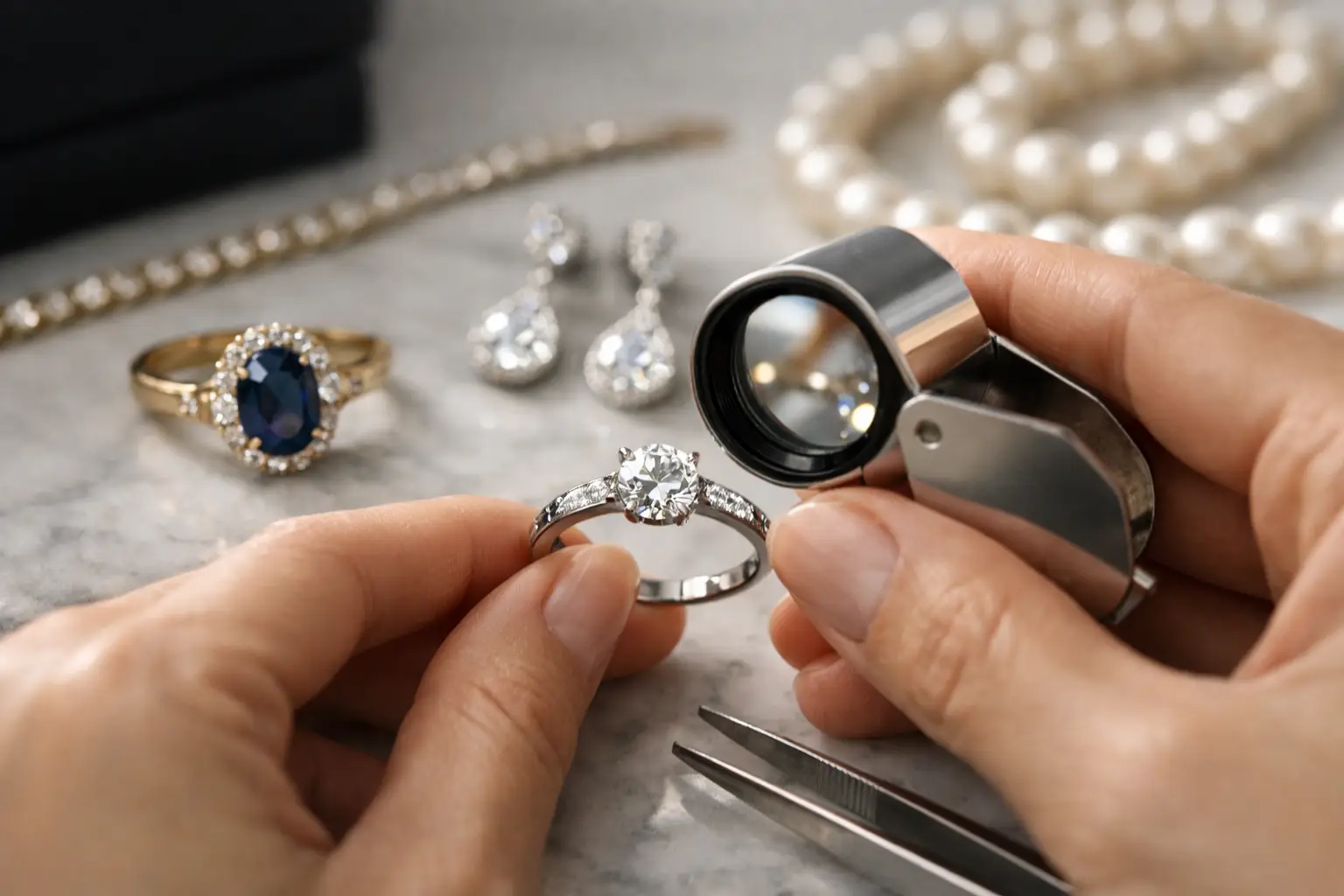
The strongest buyers are rarely the fastest ones. They turn the piece over. They ask what metal it is, how it is finished, how the stones are set, and whether the design makes sense for real wear. They do not confuse a glossy presentation with quality.
If you want to know how to spot quality jewelry, train yourself to look for restraint. Good materials, precise construction, and enduring design rarely need explanation. They announce themselves in quieter ways - in the smooth close of a clasp, in the weight of a ring, in a surface that catches light without shouting for it.
Choose jewelry the way you choose anything meant to stay with you: by how well it is made, how naturally it fits into your life, and how confidently it will age.