A diamond ring can lose its presence quietly. Hand cream settles behind the setting, soap leaves a film, and a gold chain picks up the dullness of daily wear. Fine jewelry rarely needs aggressive treatment. More often, it needs a careful hand. If you want to know how to clean fine jewelry at home, the goal is not to make it look newly manufactured. It is to restore its natural light without compromising the materials that give it lasting value.
That distinction matters. Fine jewelry is not costume jewelry with a higher price tag. It is built from precious metals, often set with stones that have their own sensitivities, fractures, and finishes. Cleaning it well means understanding what you own before you reach for water, soap, or a brush.
How to clean fine jewelry at home without risk
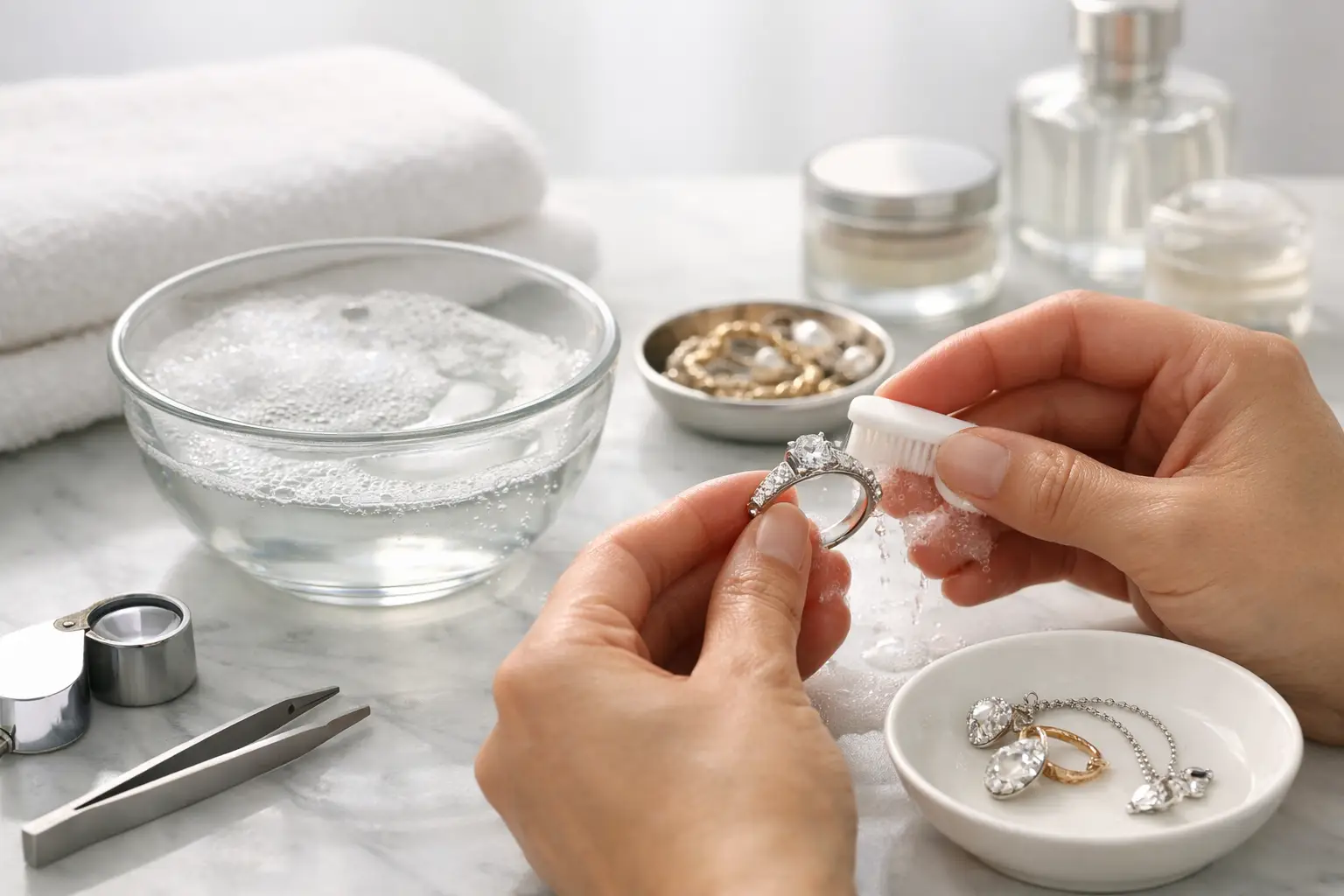
Begin with restraint. A soft microfiber cloth, a bowl of lukewarm water, and a drop of mild dish soap are enough for most routine cleaning. Avoid hot water, harsh detergents, toothpaste, baking soda pastes, and household cleaners. They are too abrasive or chemically active for fine surfaces.
Before cleaning, inspect each piece under good light. If a prong looks lifted, a clasp feels loose, or a stone shifts slightly when touched, skip the wash. Jewelry in that condition should not be soaked or brushed. Water and movement can make a minor issue worse.
If the piece appears secure, mix lukewarm water with a small amount of mild soap. Let the jewelry sit briefly, usually for five to ten minutes. Then use a very soft toothbrush or baby brush to clean around crevices, especially beneath stones and around closures where residue tends to collect. Rinse with clean lukewarm water and dry thoroughly with a lint-free cloth.
That is the core method. It works well for many gold, platinum, and diamond pieces worn regularly. The nuance begins when gemstones and finishes enter the picture.
Clean by metal and stone, not by habit
One of the most common mistakes in home care is treating every piece the same. Fine jewelry may look equally durable from the outside, but different materials respond very differently to moisture, friction, and temperature.
Gold jewelry
Solid gold is generally straightforward to clean at home. Yellow, white, and rose gold all respond well to mild soap and lukewarm water. The caution is not usually the gold itself, but the finish and the setting. White gold with rhodium plating, for example, can lose brightness over time if cleaned too aggressively. A soft cloth and light brushing are usually sufficient.
Gold vermeil or gold-plated pieces deserve a different level of care, even if they look fine at a glance. Too much rubbing can wear down the surface. If you are unsure whether a piece is solid gold or plated, clean it as gently as possible.
Platinum jewelry
Platinum is dense and durable, which makes it well suited to regular wear. It can still develop buildup that softens its luster, particularly in rings. Mild soap, lukewarm water, and a soft brush are safe in most cases. Over time, platinum develops a natural patina that many collectors appreciate. Cleaning removes residue, not character.
Diamond jewelry
Diamond is hard, but a diamond ring is not indestructible. The stone may tolerate more than most gems, yet the setting remains the vulnerable part. Oils collect quickly behind diamonds, which is why they can seem cloudy even when there is no actual damage. A gentle soak and careful brushing underneath the stone usually make the biggest difference.
If a diamond has fracture filling or other clarity treatments, cleaning becomes more case-specific. When in doubt, avoid soaking and keep the process minimal.
Sapphire and ruby
Sapphires and rubies are typically durable enough for the same mild soap method. Still, treated stones vary. Heat treatment is common and usually stable, while fracture-filled stones require more caution. You may not know a gem's treatment history, especially if it was inherited or purchased years ago. That uncertainty is a good reason to stay with the gentlest approach.
Emerald, pearl, opal, and other delicate stones
This is where home cleaning should become notably lighter. Emeralds often contain inclusions and may be treated with oils. Pearls are organic and sensitive to chemicals, dryness, and excessive moisture. Opals are softer and can react poorly to sudden temperature shifts or prolonged soaking.
For these stones, do not soak. Wipe gently with a soft damp cloth, then dry immediately. No scrubbing, no ultrasonic devices, and no experimental cleaning mixtures. Delicate stones reward caution.
What not to use on fine jewelry
Advice online is often too casual for pieces that are meant to last. A few common cleaning shortcuts are better avoided entirely.
Toothpaste is far too abrasive for polished metal and can scratch gold. Baking soda can dull finishes and lodge in settings. Vinegar, lemon juice, bleach, and ammonia-based cleaners may damage metals, weaken certain stones, or affect surface treatments. Paper towels and tissues can also leave fine scratches over time, especially on high-polish surfaces.
Ultrasonic cleaners occupy a gray area. They can be effective for some diamond and solid metal pieces, but they are not universally safe. Vibration can loosen stones, worsen existing fractures, or damage treated gems. For private owners rather than trained jewelers, they are often more risk than benefit.
How often should you clean fine jewelry at home?
It depends on wear. Pieces worn daily, especially rings, collect residue quickly and benefit from light cleaning every couple of weeks. Earrings, pendants, and occasion pieces often need less frequent attention. A quick wipe after wear can reduce the need for deeper cleaning later.
There is also a difference between cleaning and maintenance. Cleaning removes buildup. Maintenance involves checking clasps, prongs, and wear points. If a ring catches on fabric or a stone appears slightly misaligned, that is not a cleaning issue. It is a structural one.
For clients who treat jewelry as a long-term investment, moderation is the better instinct. Overcleaning can create wear, especially on plated finishes, softer stones, and intricate settings. Fine jewelry should look lived with, not overworked.
Storage affects how clean jewelry stays
A well-cleaned piece can lose its finish quickly if stored carelessly. Chains tangle, stones rub against one another, and metals collect dust and moisture in open trays. Proper storage is part of care, not an afterthought.
Keep pieces separated in soft pouches or lined compartments. Store pearl jewelry away from overly dry conditions and avoid sealing it in plastic for long periods. Fasten chains before placing them away to reduce knots. And if you remove jewelry before applying lotion, fragrance, or hairspray, you will cut down on buildup significantly.
This is often the simplest way to preserve brilliance. Less residue means less intervention.
When home cleaning is not enough
Some pieces should go directly to a professional. Antique jewelry, pavé settings, fragile clasps, heavily included emeralds, and anything with visible movement in the stone deserve expert handling. The same applies to jewelry with sentimental or archival value. There is little to gain from improvisation.
Professional cleaning also has a different purpose. It is not only about restoring shine. It allows a jeweler to inspect wear, reinforce settings, and catch small issues before they become losses. For a piece you wear often, periodic professional inspection is part of responsible ownership.
A brand built around permanence, like Maison Astral, understands that longevity is not accidental. Jewelry keeps its presence through design, materials, and care in equal measure.
A simple routine that preserves the piece
The best home care routine is quiet. Wipe jewelry after wear. Clean gently when buildup becomes visible. Separate pieces in storage. Pause if anything feels loose or uncertain. Fine jewelry does not ask for much, but it responds well to discipline.
If you are deciding how to clean fine jewelry at home, think less about making it sparkle on command and more about protecting what made you choose it in the first place. The shine returns easily. The real luxury is keeping the piece intact for years of wear.